

Description
Part #84066 for the inside plug 250s and earlier cars
(Sold Individually)
Product Search: KIL-109
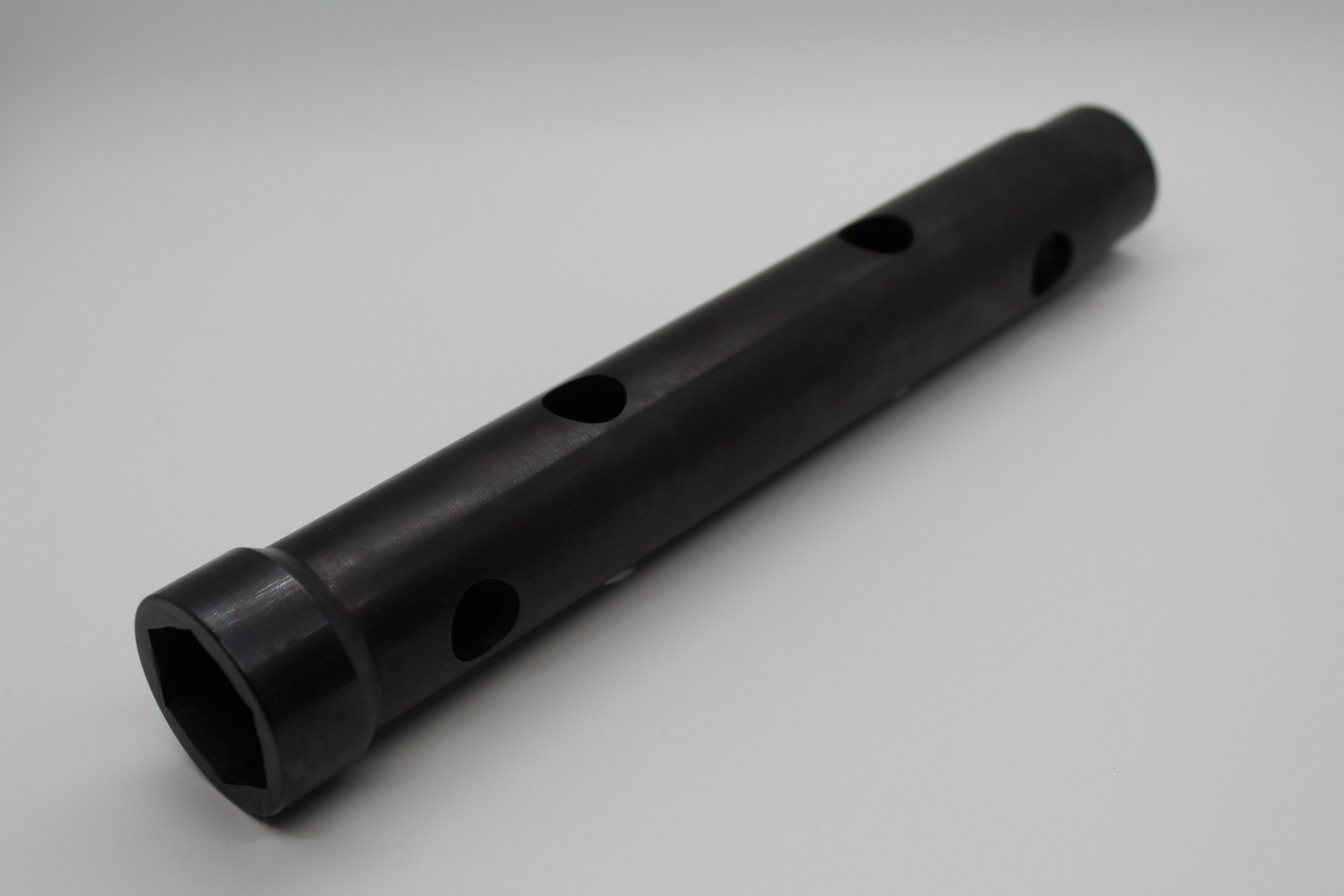
$630.00
Part #84066 for the inside plug 250s and earlier cars
(Sold Individually)
Product Search: KIL-109

From the early 1920s until the mid 1960s the Rudge-Whitworth design wire wheels were the standard for almost all race cars. Ferrari chose them for the street and race cars and used them as standard equipment or an option through the Daytona series in the early 1970s. The Rudge-Whitworth design wheels were made in Milan as Carlo Borrani wheels until 1961 and as Ruote Borrani after that. They were made with splined hubs and were attached with a central locking nut with two ears and later three ears. These wheel nuts or knock-offs were designed to be removed using a lead hammer. Several different designs were used throughout the years. 275/330 Type.
(Sold Individually)
Product Search: KIL-105D
Read more
Two types of grease guns were used for the 250 series cars. The type with the lathe turned handle was appropriate for the inside plug 250s and most of the earlier cars. The very early cars probably used something similar, but perhaps from a different manufacturer. The late, outside plug 250s and other later cars used the grease gun with the flat, cast handles. Late Grease Gun for 250s and later cars with the flat, cast handle.
(Sold Individually)
Product Search: KIL-110B
Add to cart
From the early 1920s until the mid 1960s the Rudge-Whitworth design wire wheels were the standard for almost all race cars. Ferrari chose them for the street and race cars and used them as standard equipment or an option through the Daytona series in the early 1970s. The Rudge-Whitworth design wheels were made in Milan as Carlo Borrani wheels until 1961 and as Ruote Borrani after that. They were made with splined hubs and were attached with a central locking nut with two ears and later three ears. These wheel nuts or knock-offs were designed to be removed using a lead hammer. Several different designs were used throughout the years. Inside Plug 250 (from and early P.F. Spyder)
(Sold Individually)
Product Search: KIL-105B
Add to cart
Ferrari used these button-type grease fittings from the very earliest cars until the 275’s. During the production of the 250 series cars some of the pieces purchased from outside suppliers used the normal snap-on type. The sealed tie rod ends are a good example showing that a lot of the later cars used both types of grease fittings. The button type grease fittings were made of brass and plated with a very thin layer of nickel. The nickel finish quickly wore off due to dust and dirt on the road plus the factory recommended 2,500 mile lubrication schedule. The button type grease fittings all used the same dimension for the shaft and head but there was a variety of thread sizes. 8×1.25mm: The French always have to be different. Don’t think these were used on Ferraris.
(Sold Individually)
Product Search: KIL-100-4
Add to cart